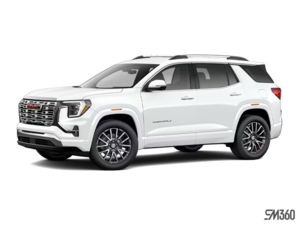

How Much Fuel Does All-Wheel Drive Add to a 2026 GMC Terrain Elevation?
September 17 2026,
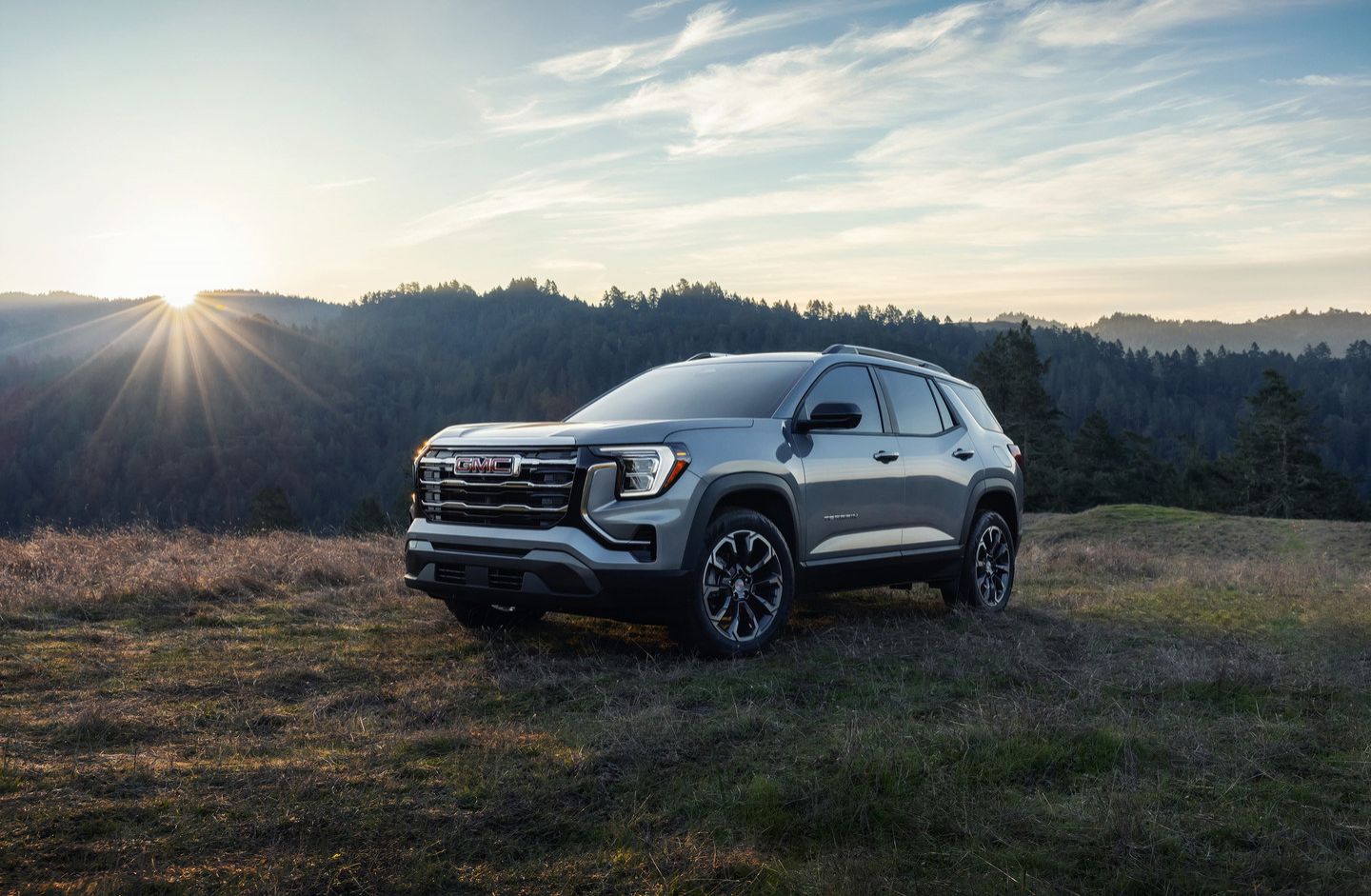
Choosing between the 2026 Terrain Elevation’s front-wheel-drive and all-wheel-drive setups comes down to one trade-off: a bit more fuel at the pump for a bit more grip underneath you. For shoppers across Newfoundland and Labrador, that trade-off is worth understanding before you sign anything.
This isn’t a comparison to other SUVs. It’s a look at how one drivetrain choice, on the same Terrain Elevation, changes what you’ll spend on gas and what you’ll feel behind the wheel.
What Changes Between FWD And AWD
Both versions of the Elevation share the same 1.5 L turbocharged four-cylinder engine, producing 175 hp. Torque is where the drivetrains split: the FWD Elevation makes 184 lb-ft, while the AWD Elevation makes 203 lb-ft, thanks to the different transmission and axle hardware behind it.
The FWD Elevation pairs that engine with a continuously variable transmission (CVT) and a 5.81 axle ratio. The AWD Elevation instead uses an 8-speed automatic transmission with a 3.47 axle ratio. Different gearing, different torque delivery to the wheels, different fuel-use pattern.
How The AWD System Actually Works
Adding AWD means adding hardware: a rear differential, a driveshaft, and the electronics that shift power to the rear wheels when the front tires start to slip. That hardware adds weight. The AWD Elevation weighs 3,598 lbs (1,632 kg) at the curb, versus 3,446 lbs (1,563 kg) for the FWD version.
That extra mass, plus the added driveline friction of turning a second axle, is the whole story behind the fuel-economy gap. It isn’t a bigger engine working harder; it’s the same 175 hp engine moving more weight and turning more parts.
Fuel Economy, Side By Side
The numbers below are Canadian ratings in L/100 km, plus the fuel tank size for each version.
|
Spec |
Elevation FWD |
Elevation AWD |
|
City |
9.2 L/100 km |
9.9 L/100 km |
|
Highway |
8.3 L/100 km |
8.5 L/100 km |
|
Combined |
8.8 L/100 km |
9.3 L/100 km |
|
Fuel tank |
56 L |
59 L |
The combined gap is half a litre per 100 km, but it isn’t spread evenly. City driving shows the biggest split, 0.7 L/100 km, while highway driving narrows it to just 0.2 L/100 km. That pattern makes sense: stop-and-go driving asks the AWD system to keep reacting to wheel slip and load shifts, while steady highway cruising rarely calls on the rear axle at all.
The AWD Elevation’s larger 59 L tank partly offsets its thirstier rating. Over a full tank, the AWD version’s range advantage from the bigger tank narrows the practical difference in how often you’re stopping to refuel, even though its L/100 km number is higher.
Why It Matters In Everyday, Year-Round Driving

A half-litre-per-100 km gap sounds small until you map it against a full year of driving on roads that see everything from gravel shoulders to sudden rain squalls to icy stretches once the seasons turn. AWD sends power to all four wheels continuously, which improves traction on wet pavement, loose gravel, and snow-covered surfaces without the driver needing to do anything.
That traction advantage also shows up in what the Elevation can tow. The FWD Elevation is rated for 800 lbs (363 kg) of trailering; the AWD Elevation, with its stronger rear-axle hardware, is rated for 1,500 lbs (680 kg). If a small trailer, boat, or utility hauler is part of the plan, that gap matters more than the fuel-economy difference.
What doesn’t change between the two: the Terrain Elevation keeps its five-passenger layout, its 844 L of cargo space behind the rear seats (1,798 L with them folded), its 15-inch touchscreen with wireless smartphone connectivity, heated front seats and steering wheel, and the same suite of over 15 driver-assist features. The drivetrain choice affects how the Terrain moves, not what it seats or carries.
Who Should Choose Which
AWD earns its keep for drivers who face regular winter conditions, gravel or unpaved routes, or frequent highway trips where a bit of extra confidence in a crosswind or slush matters more than an extra half-litre of fuel per 100 km. Rural routes and mixed-condition commutes are exactly where that continuous traction pays off.
FWD makes more sense for drivers whose routes stay mostly paved and predictable, and who’d rather bank the fuel savings, plus the lighter curb weight, over the added grip. If fuel use is the top priority and the traction demands are modest, FWD is the more efficient choice without giving up the engine, cargo room, or feature set that come standard on Elevation.
Comparing Elevation AWD And FWD In Person
The 2026 Terrain Elevation gives buyers a genuine choice between two drivetrains built around the same engine, cabin, and cargo space, with the difference coming down to fuel use, traction, and towing. Both versions keep the Elevation’s core value intact.
Visit Woodward Motors Port Aux Basques Chevrolet in Port aux Basques to compare the Elevation FWD and AWD side by side, and talk through which fuel-economy and traction balance fits how you actually drive around Newfoundland and Labrador.